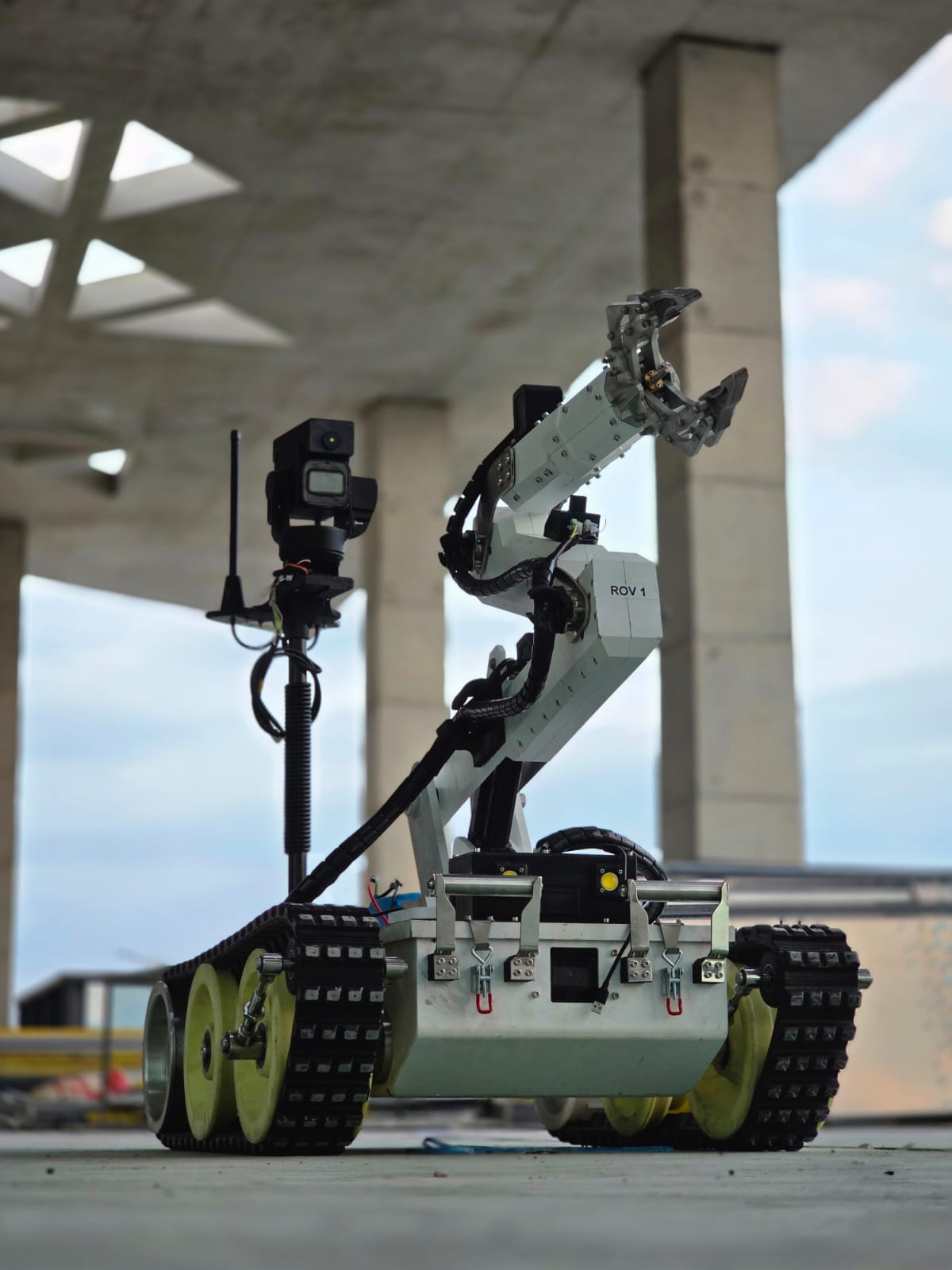
ROV Control System — Explosive Ordnance Disposal (EOD)
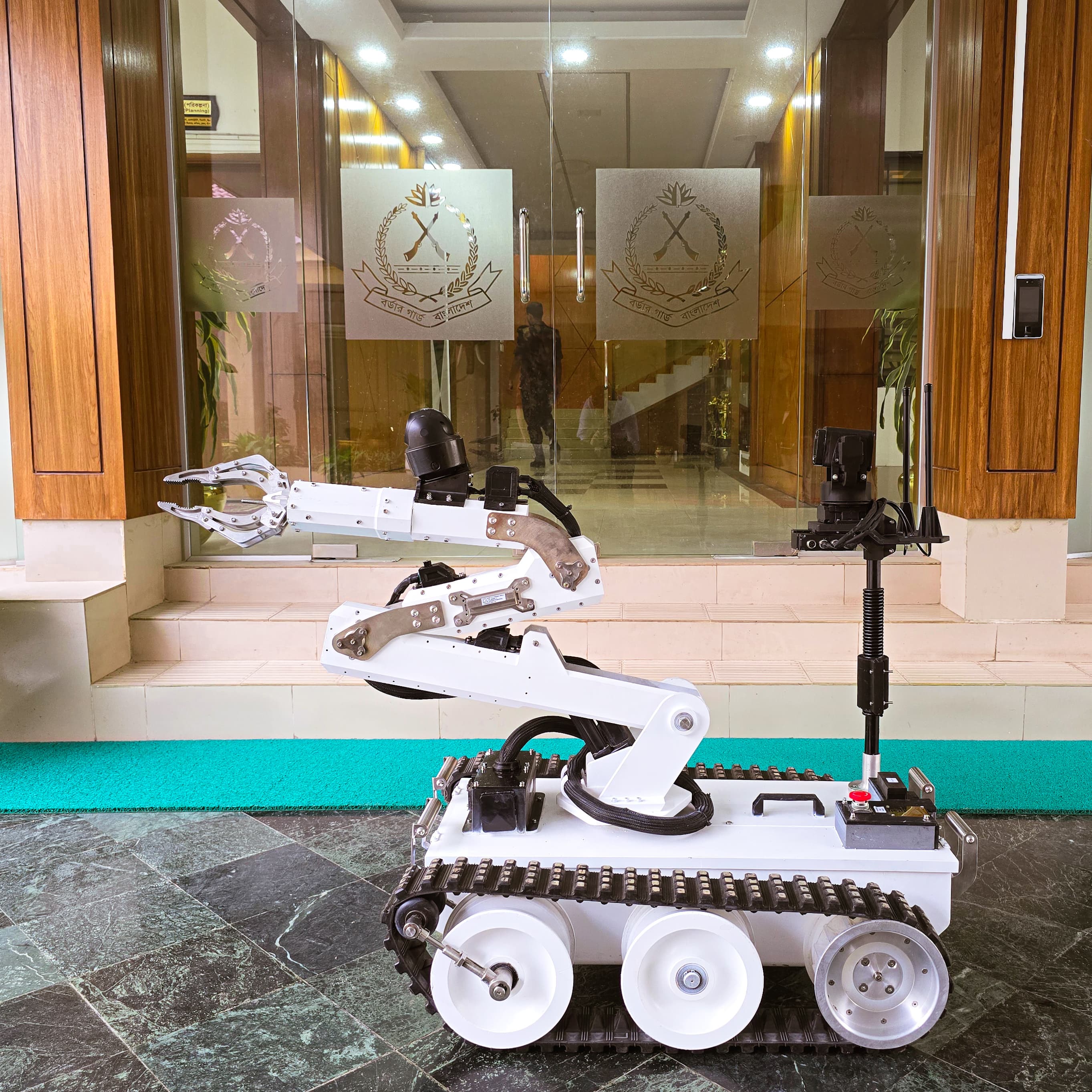
Military-grade remotely operated vehicle for Explosive Ordnance Disposal — real-time multi-node robotics, motion control, and a standoff RF operator link. Delivered as field-ready units, deployed in UN operations, and the multi-node protocol was published at ICCIT 2024 (IEEE) — Best Paper & Best Technical Presentation.
Overview
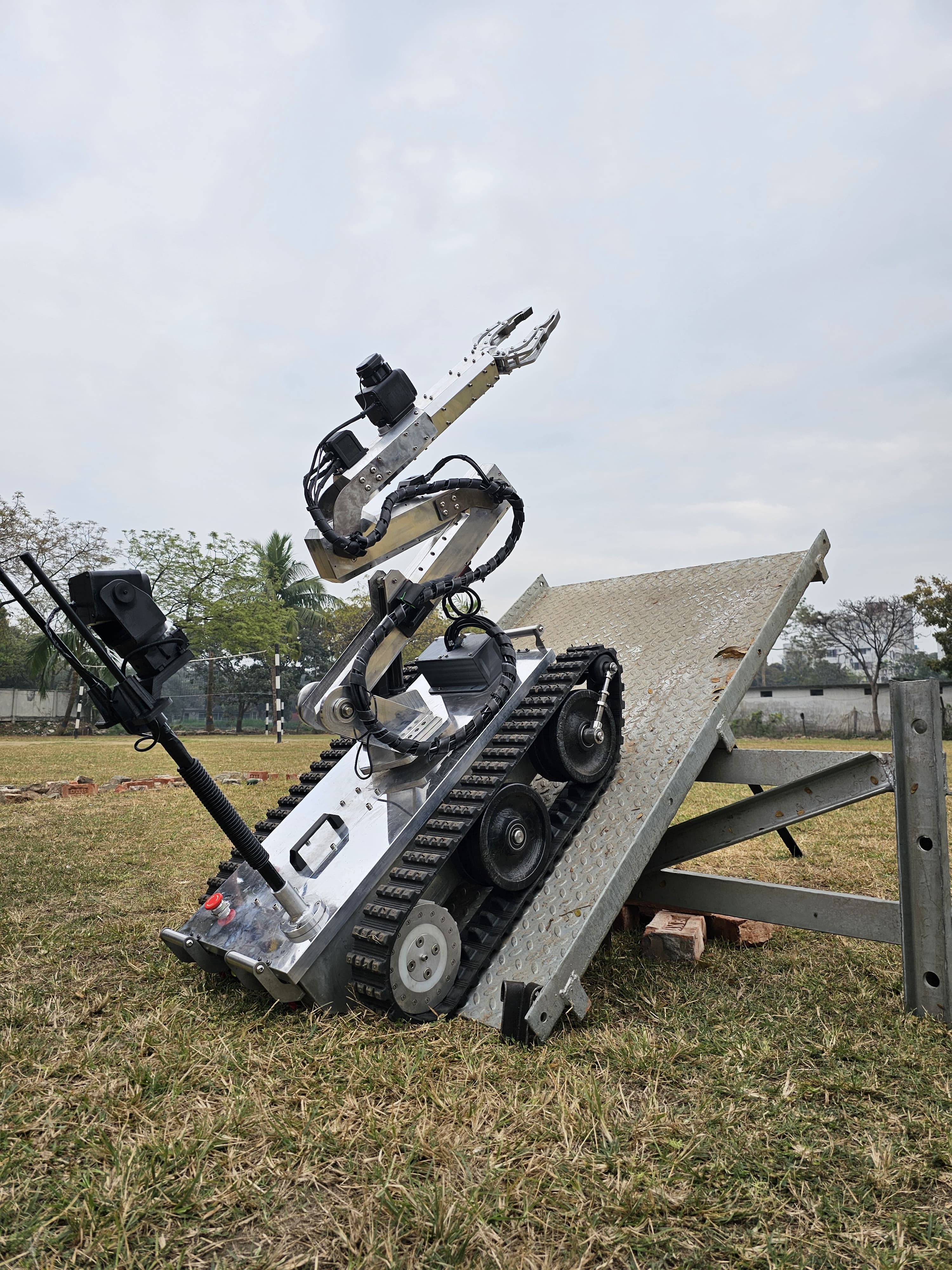
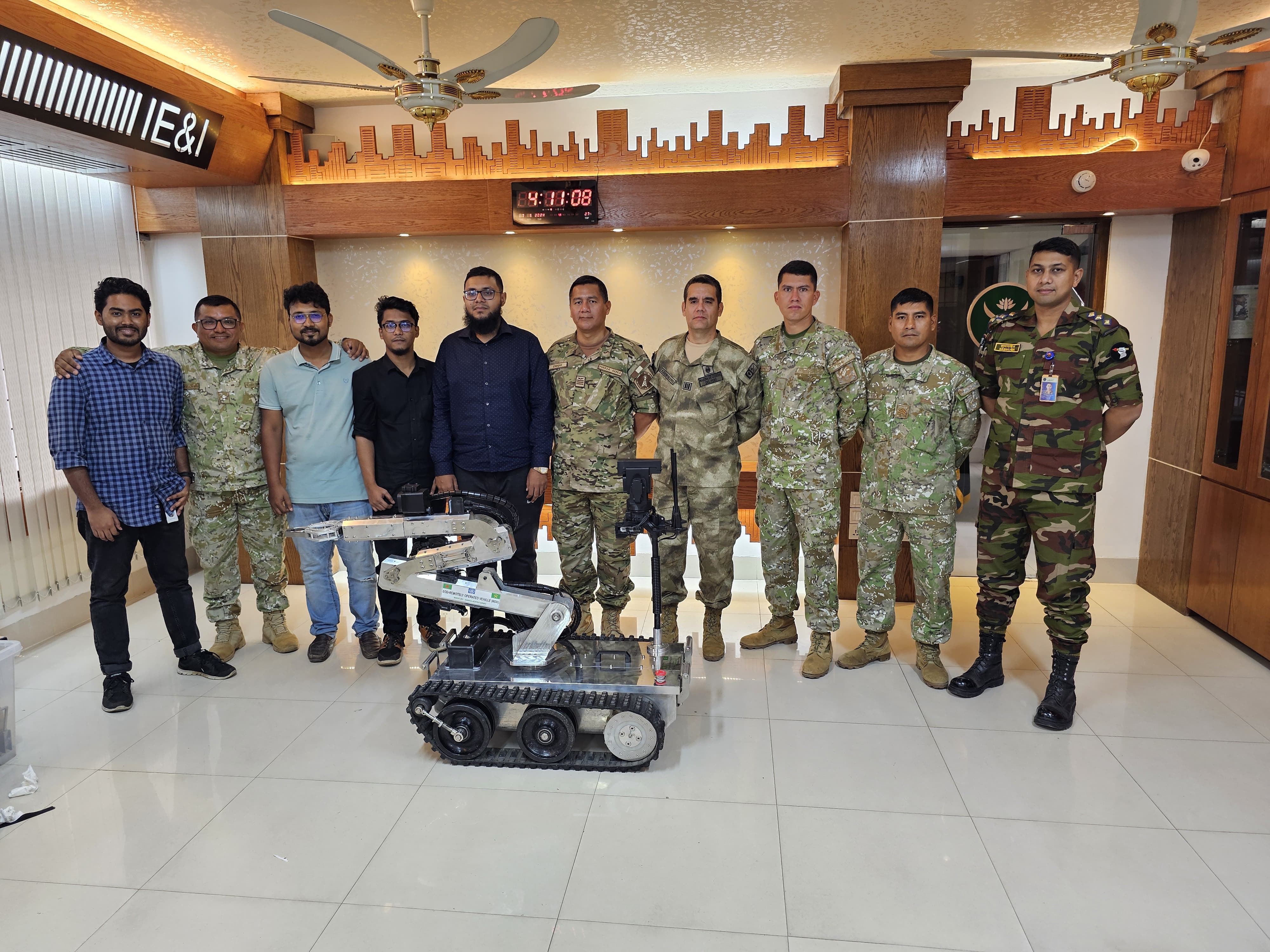
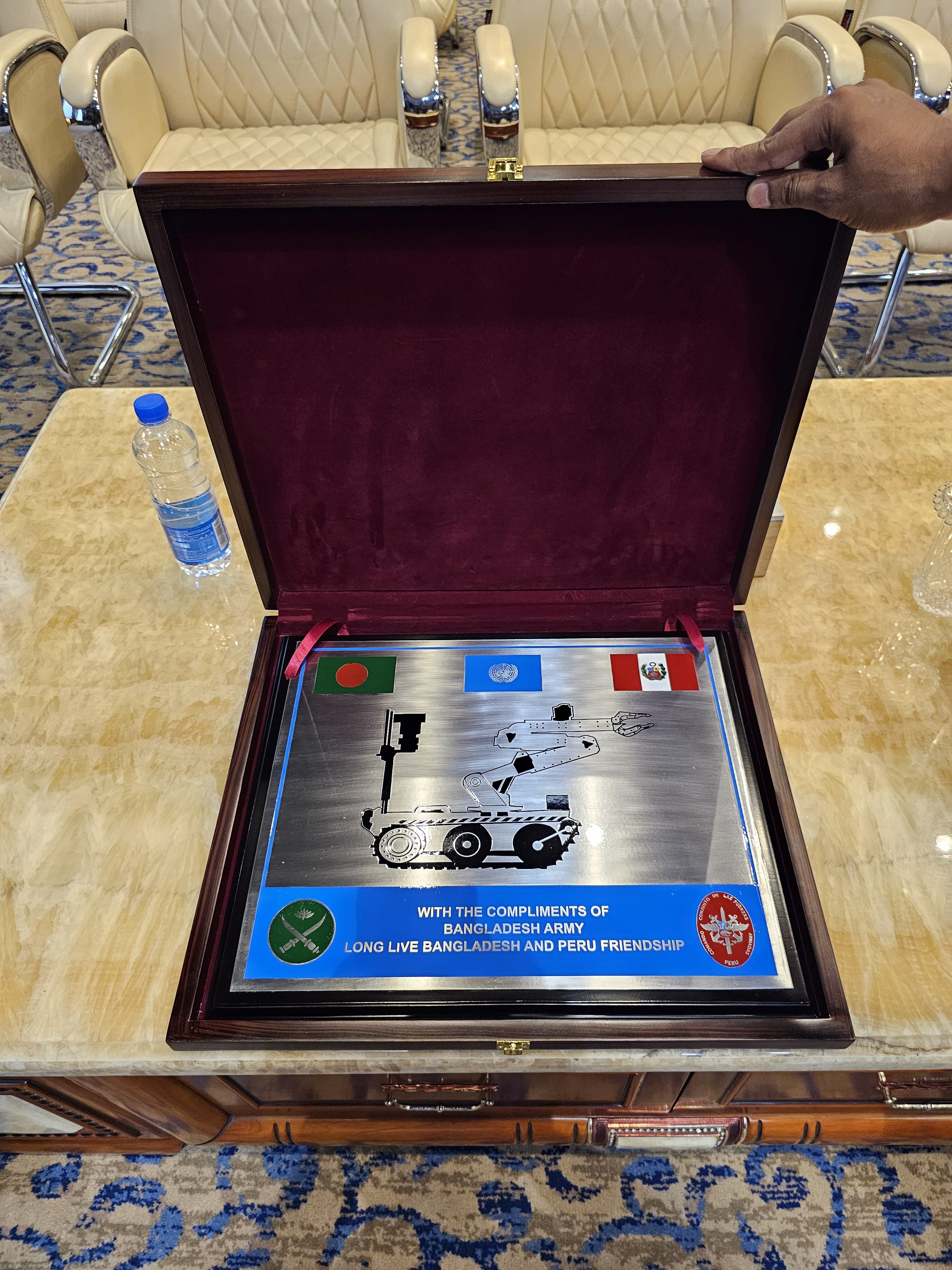
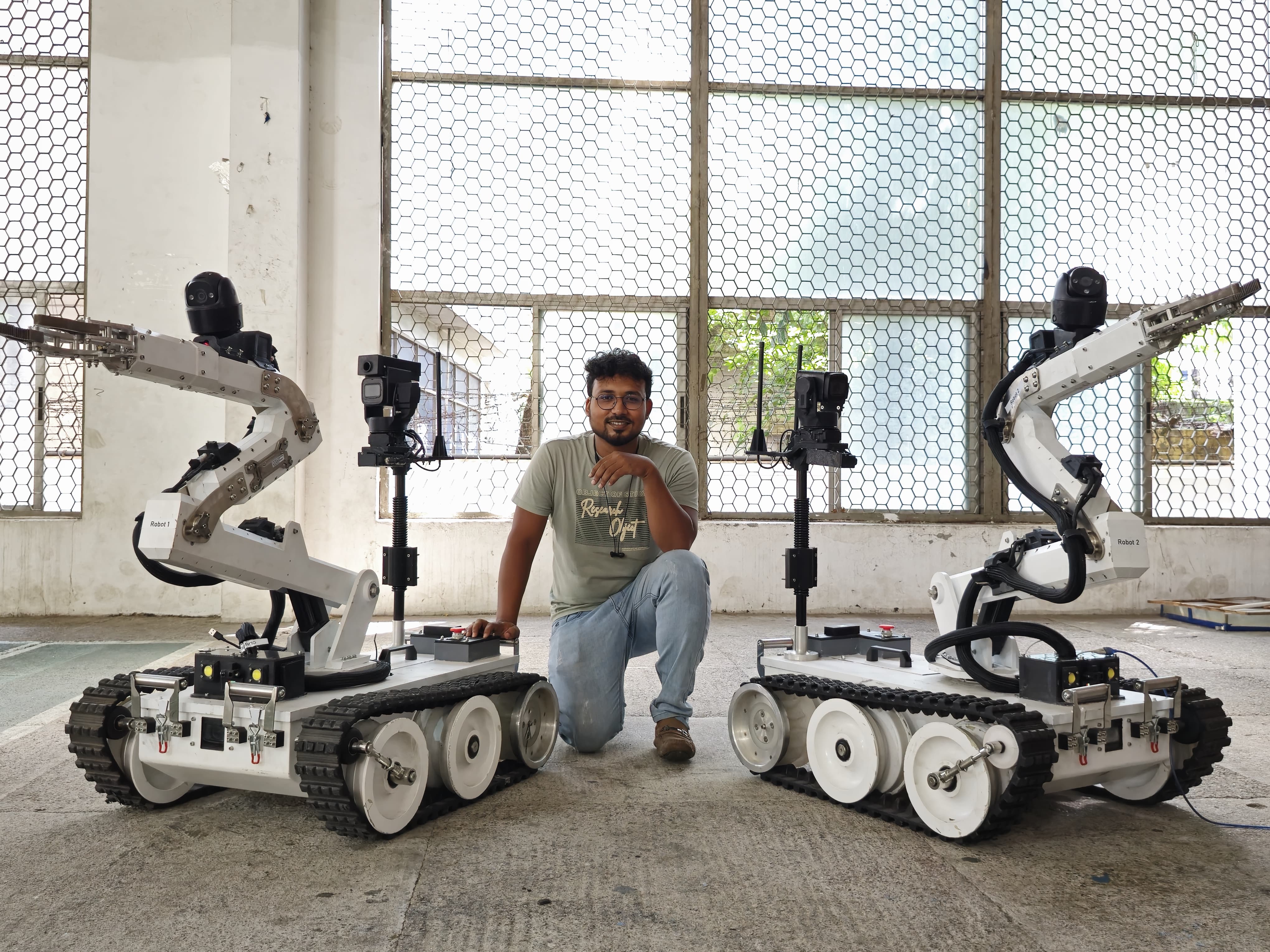
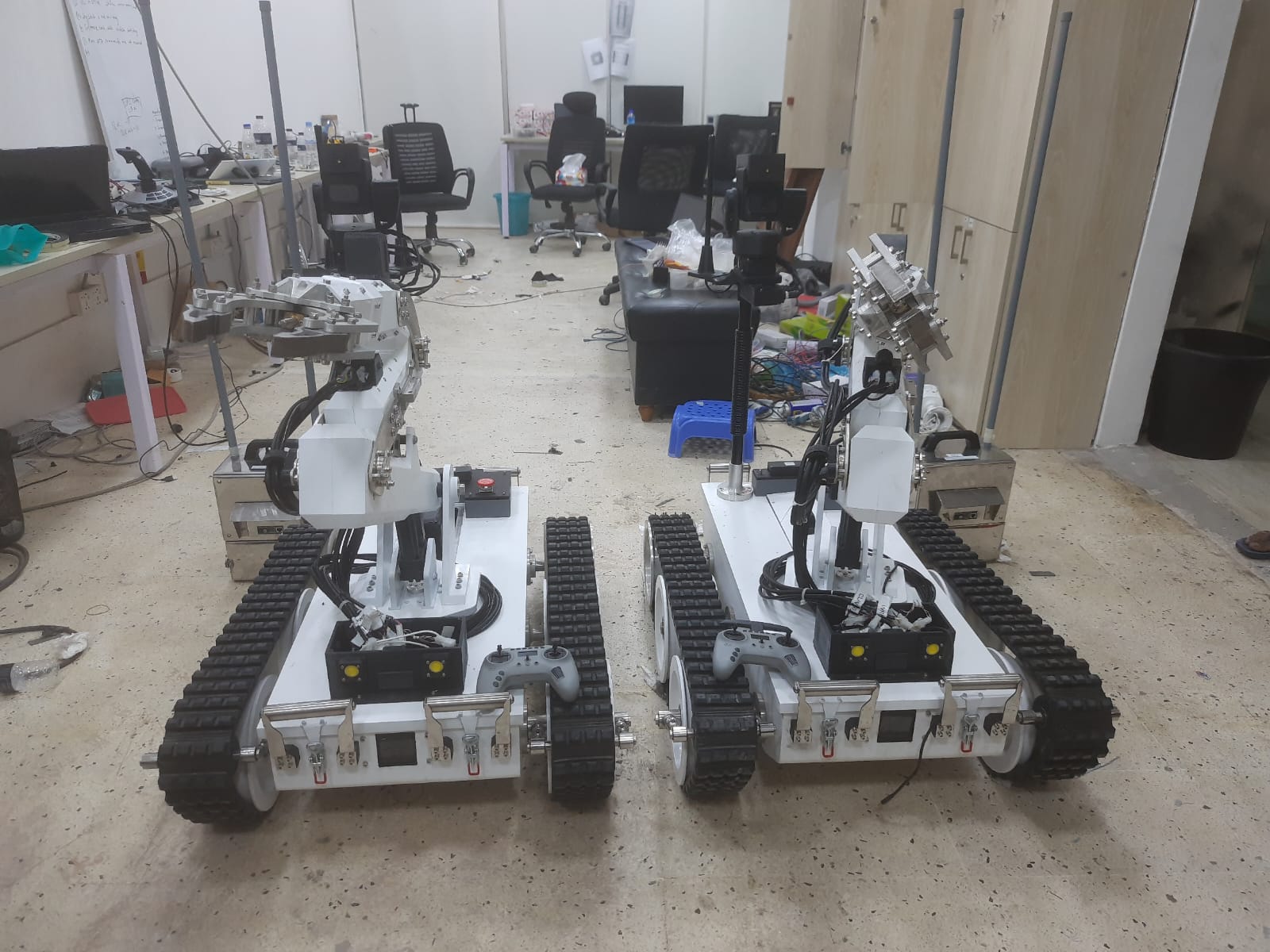
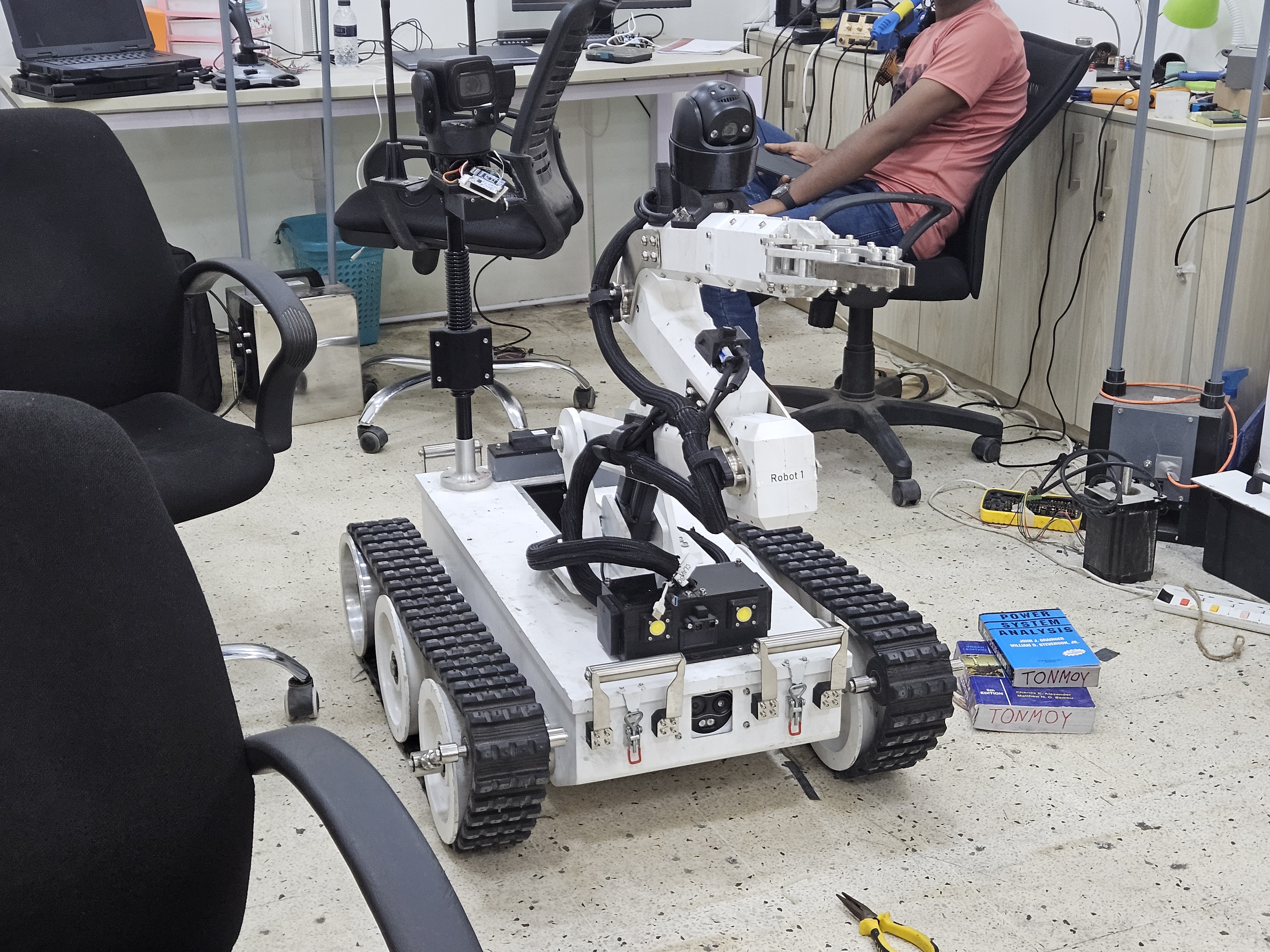
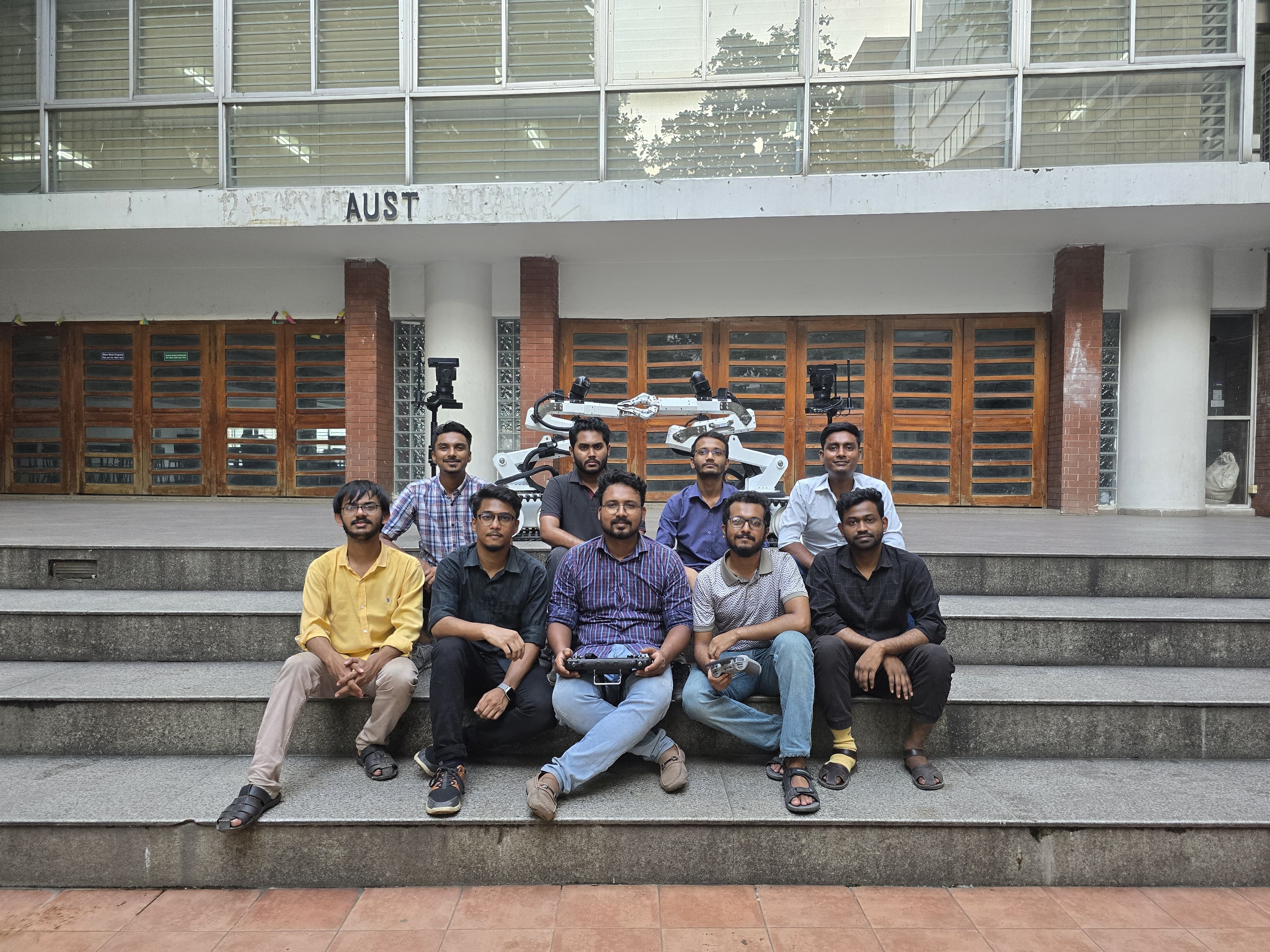
I designed and developed the complete firmware and real-time multi-node communication architecture — from the ground up — for a military-grade Remotely Operated Vehicle (ROV) built for Explosive Ordnance Disposal (EOD). The system was delivered as 6 field-ready units, deployed in United Nations operations, and the multi-node communication protocol I architected was published and awarded Best Paper & Best Technical Presentation at ICCIT 2024 (IEEE).
Challenge
An EOD ROV is a robot where failure isn't an inconvenience — it's a safety-critical event:
- Multiple physical nodes (drive, sensor, actuator) have to act as one coordinated system over a robust field-grade bus, not a lab-bench link
- Timing has to be deterministic — a bomb-disposal arm can't have unpredictable command latency
- Every node must execute every command, but only the addressed node should respond — otherwise a shared bus turns into a broadcast storm
- Data integrity is non-negotiable on a live EOD mission
- The operator needs a reliable standoff RF control link to keep a safe physical distance from the vehicle
Approach
Multi-node control network
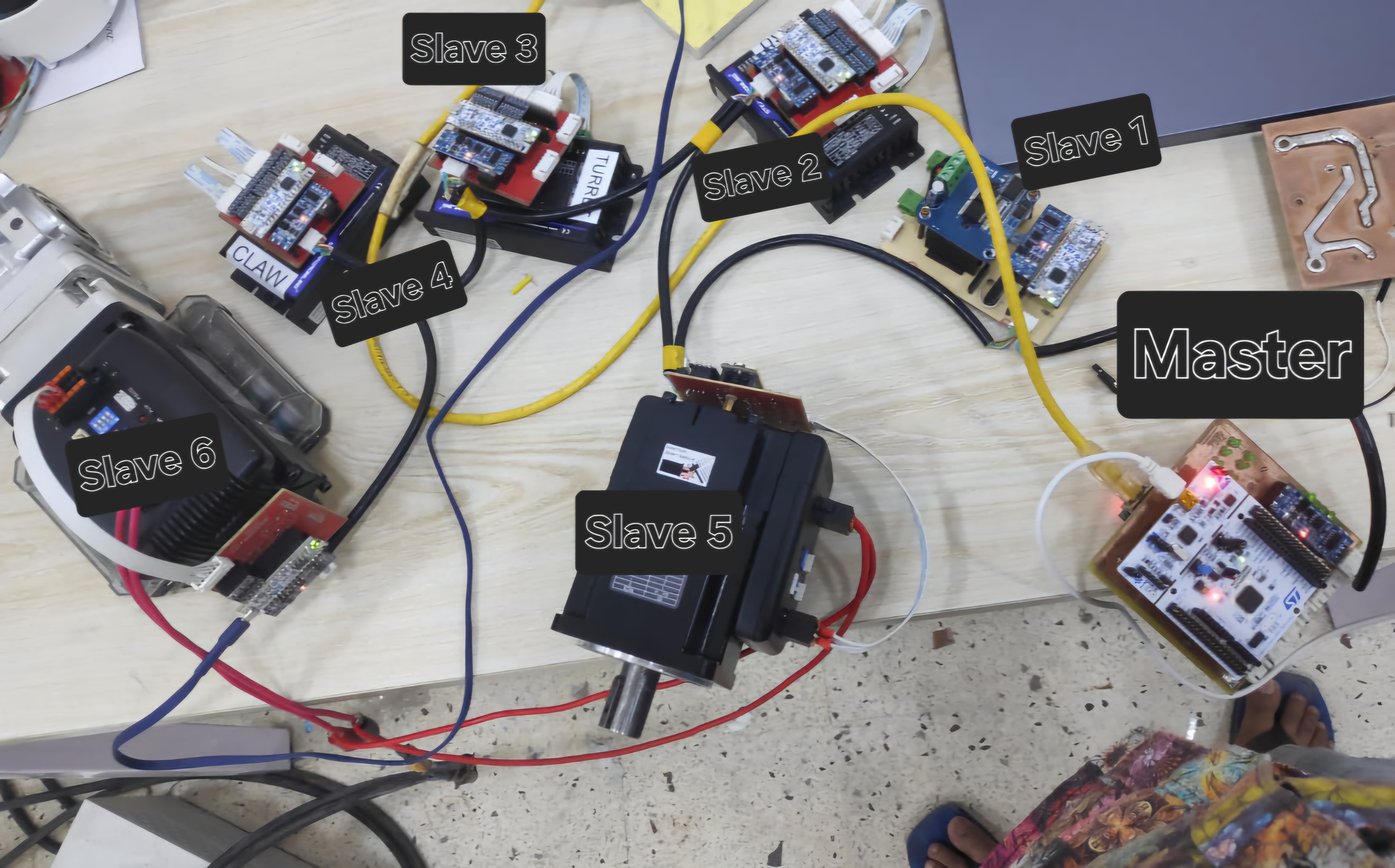
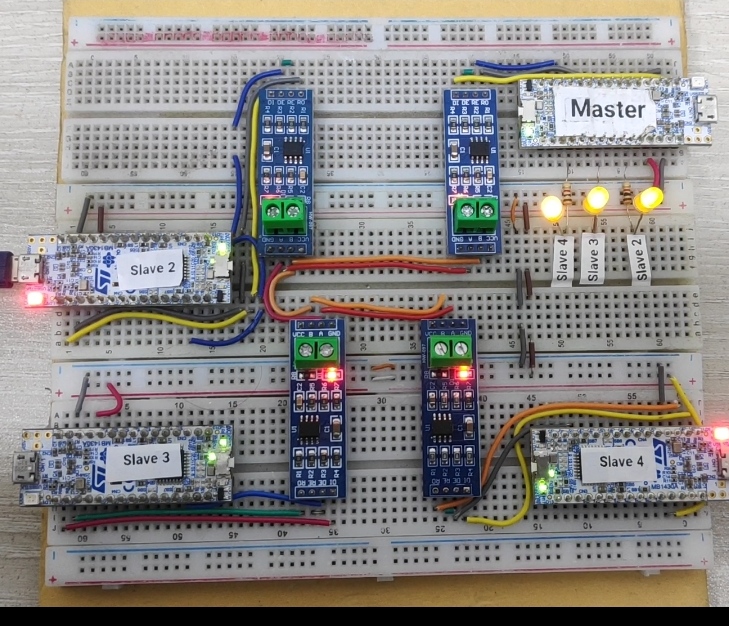
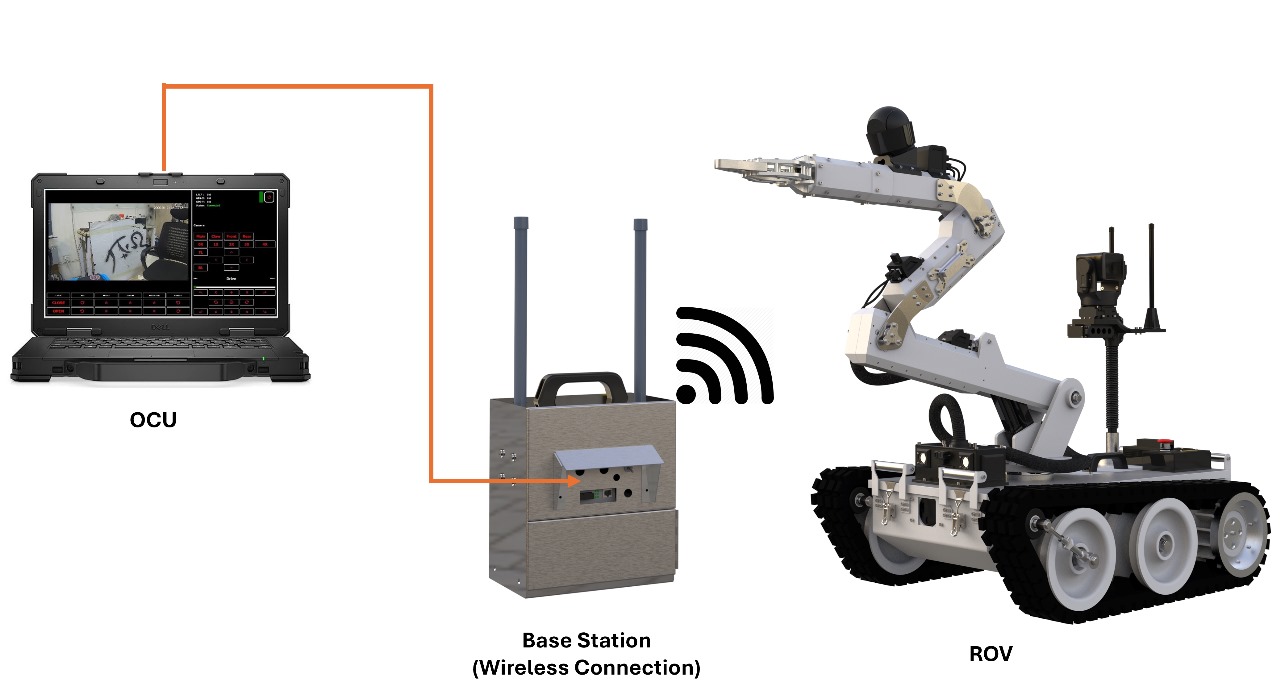
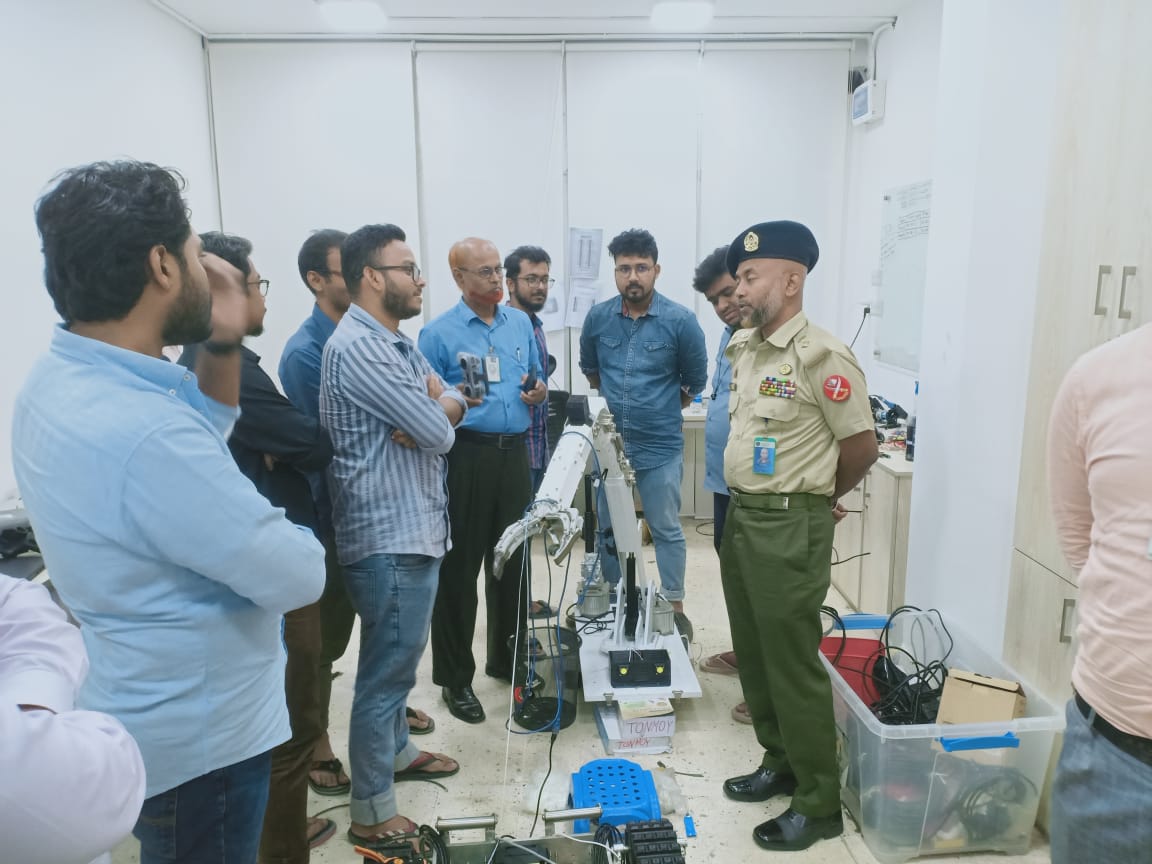
Architected the network connecting drive, sensor, and actuator nodes over RS485 differential signalling, with a master–slave broadcast scheme across STM32 nodes in a daisy-chain configuration, using DMA for efficient data transfer and CRC for error detection, with precise timing control across the chain.
Addressed-feedback mechanism (published research)
Designed a feedback protocol where all nodes execute the broadcast command, but only the addressed node returns feedback — solving the classic multi-drop bus response-collision problem without sacrificing broadcast simplicity. Validated on a 6-DOF ROV with differential drive and published at ICCIT 2024 (DOI: 10.1109/ICCIT64611.2024.11022430) — Best Paper Award & Best Paper Presenter.
Standoff RF operator link
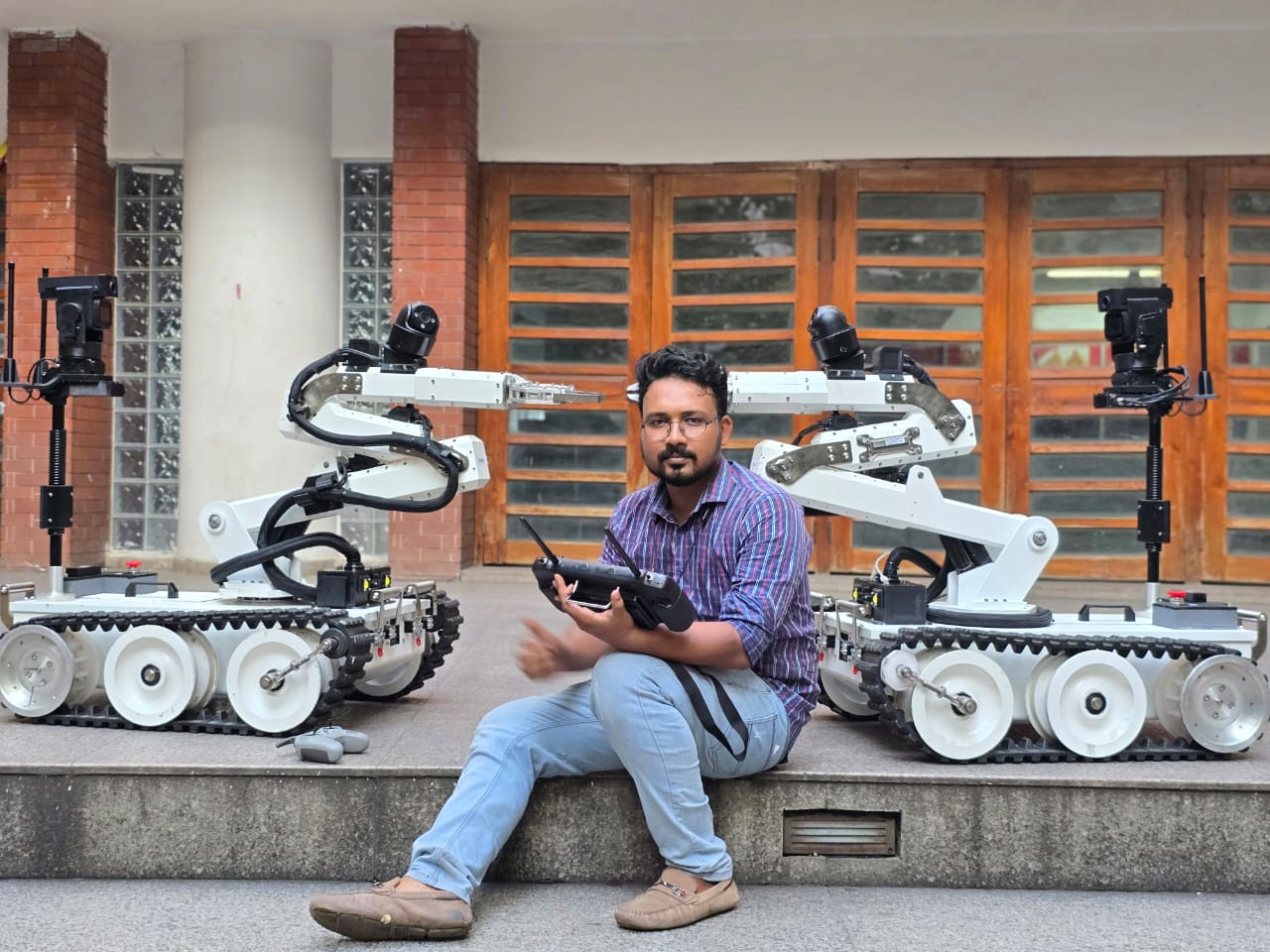
Implemented the wireless command link giving the operator remote control of the vehicle from a safe distance, using 1.4 GHz RF transceiver/receiver systems, SBUS for low-latency control-channel framing, and SIYI TX/RX control links for the radio hardware layer.
Motion control
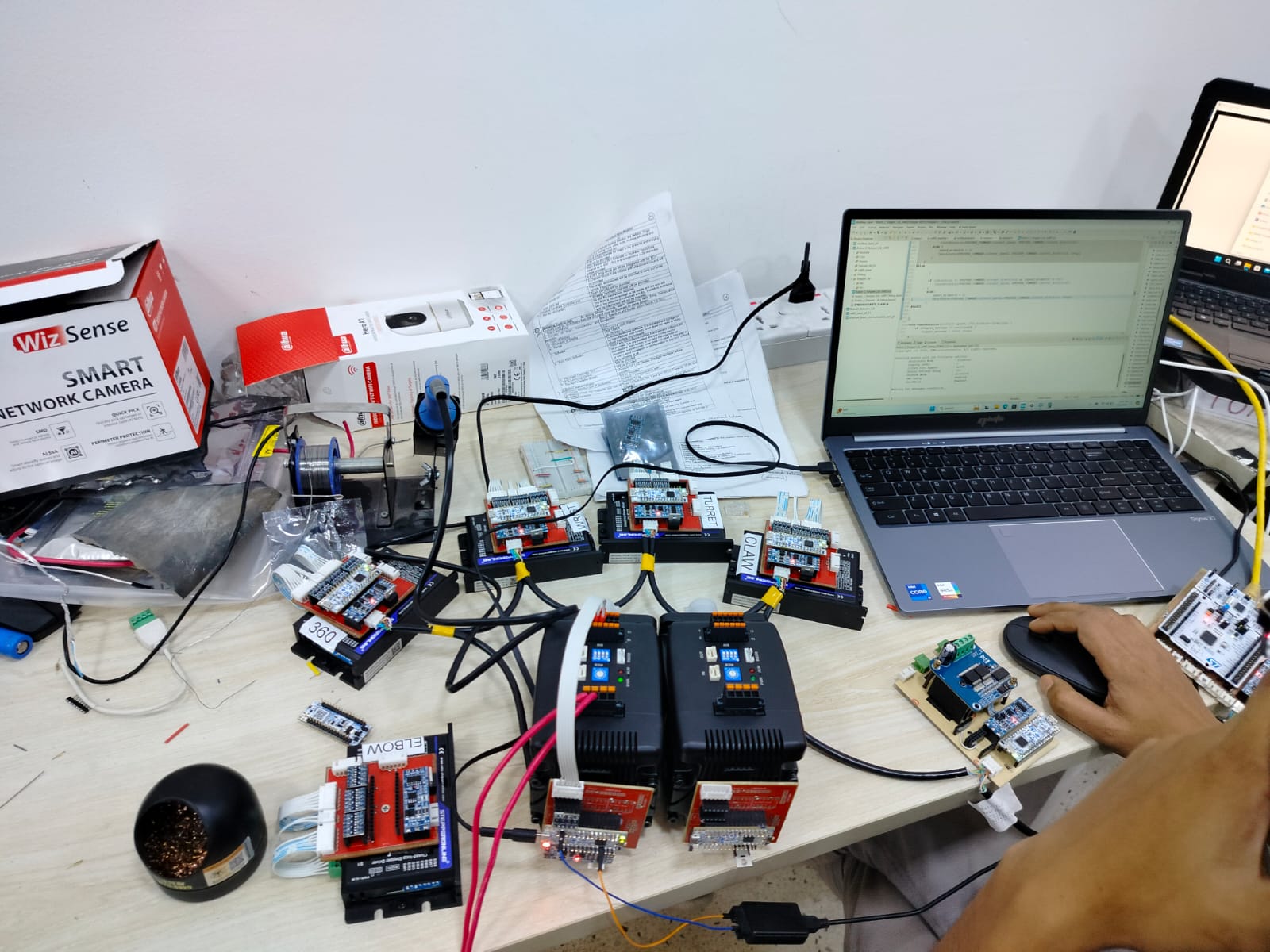
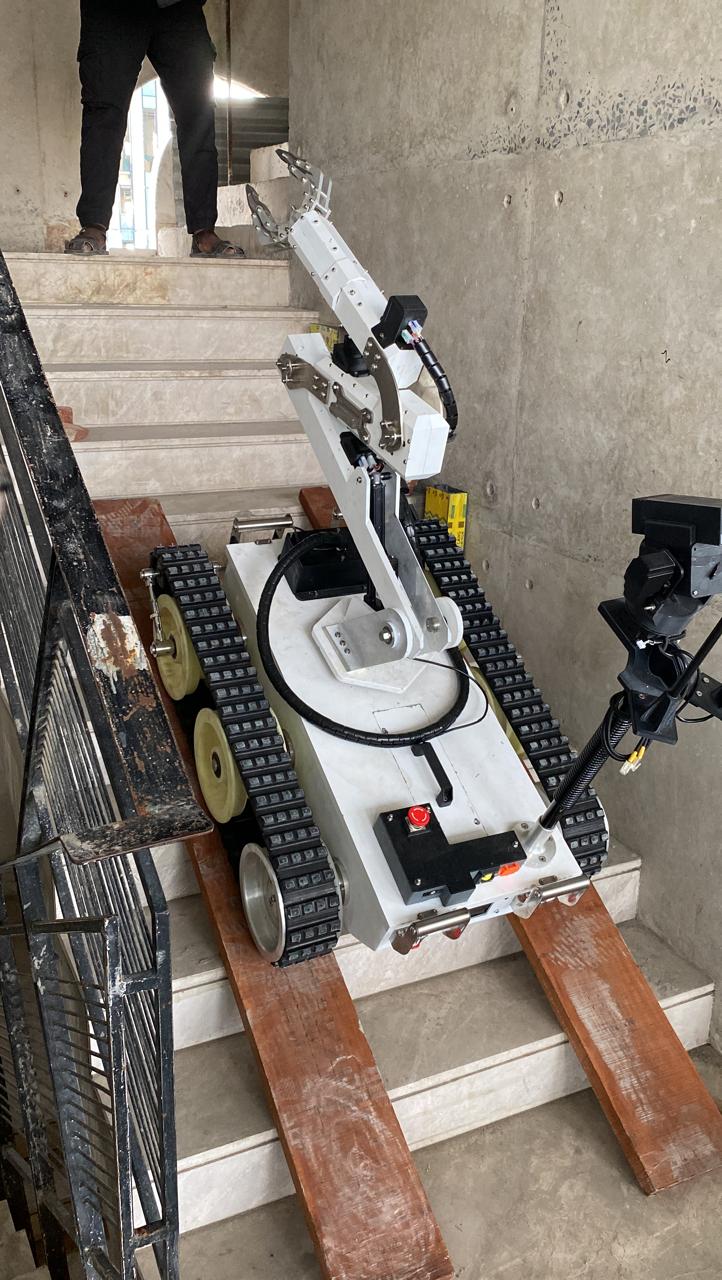
Stepper motor control and bus communication for coordinated multi-axis movement across the ROV's drive and manipulator systems.
Diagnostics and telemetry
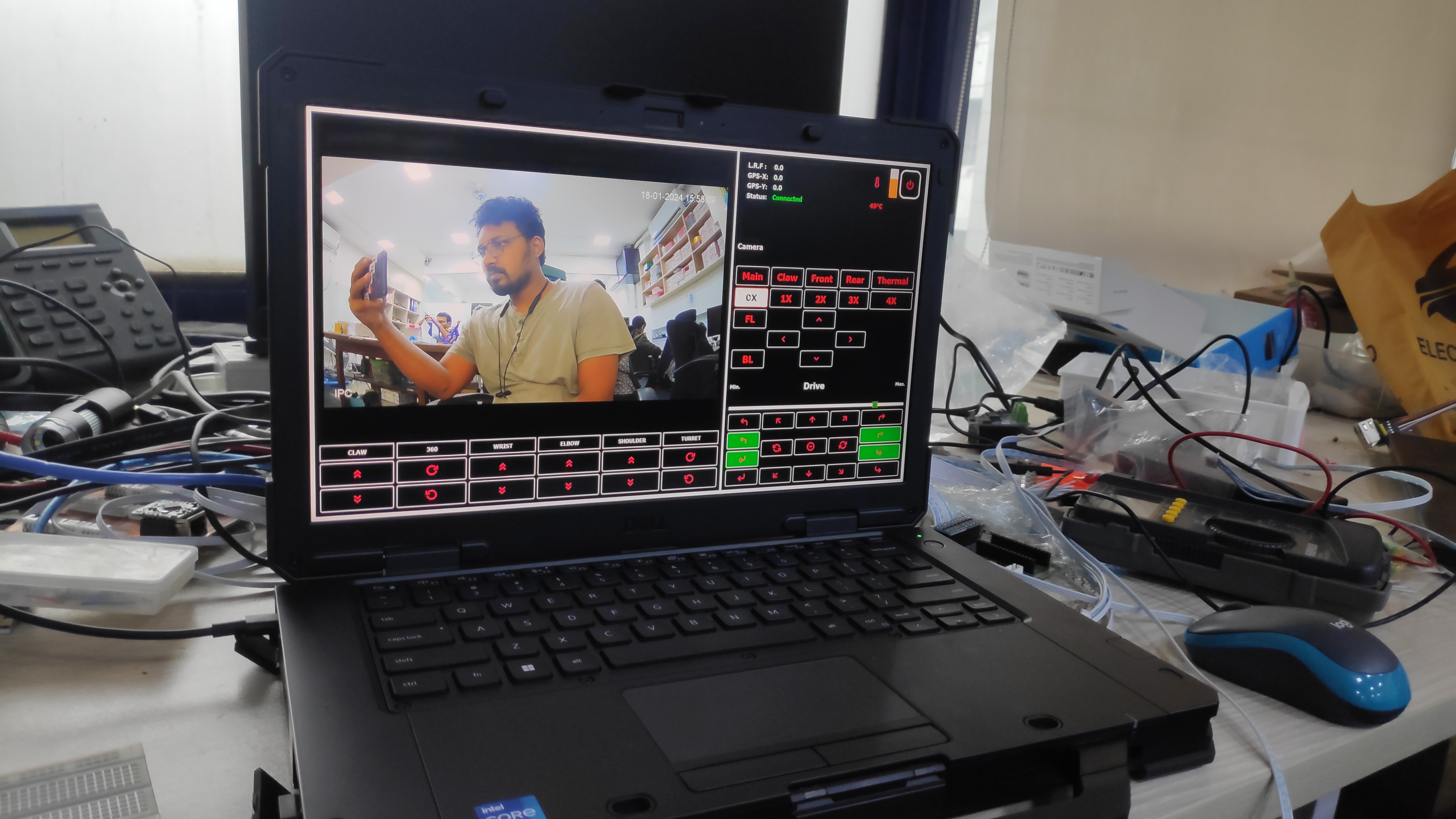
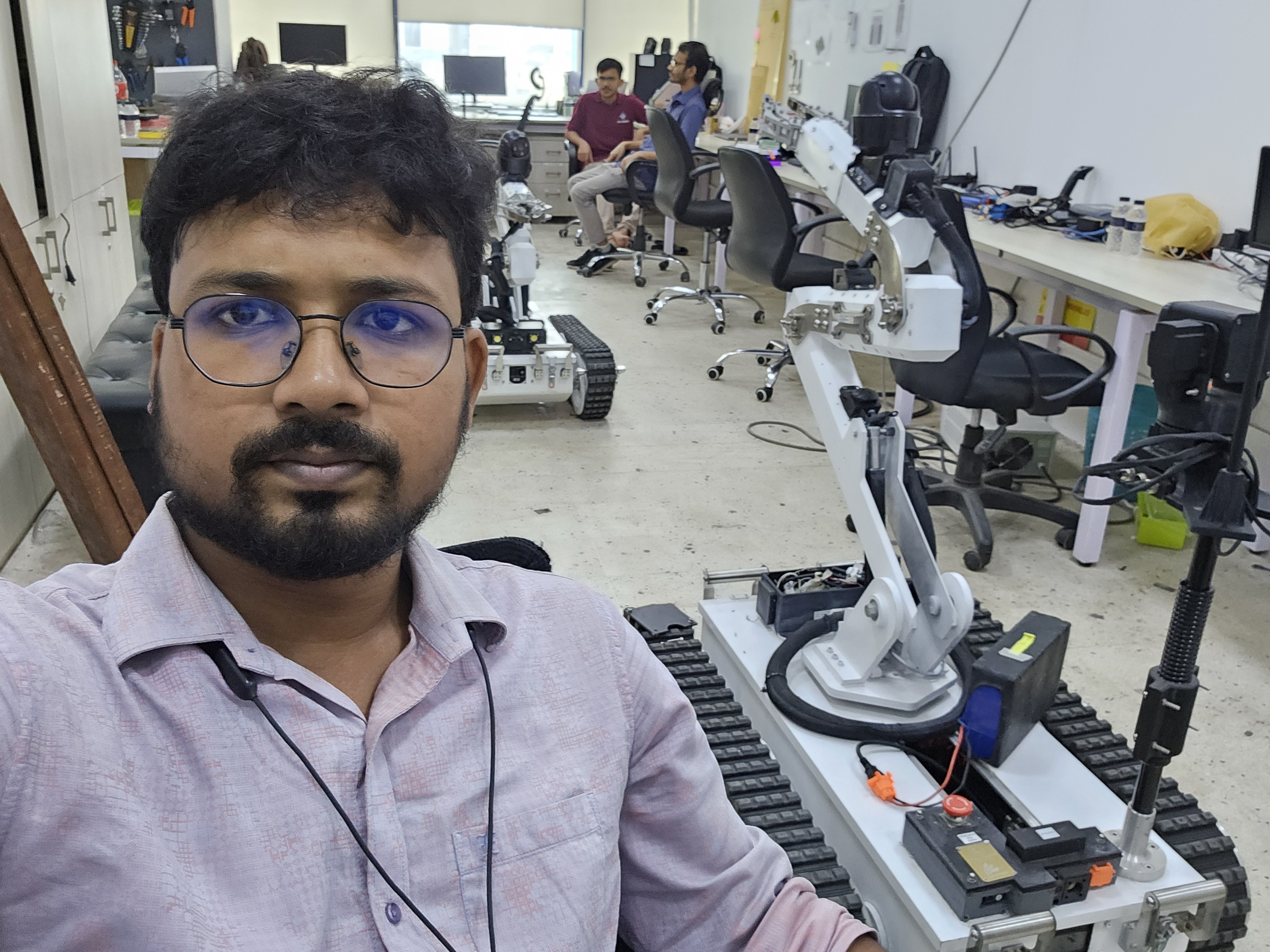
Built diagnostic and visualization tooling for debugging, real-time telemetry monitoring, and live control during development and field validation, with TCP/IP-based multi-node operation supporting higher-level monitoring.
Field deployment
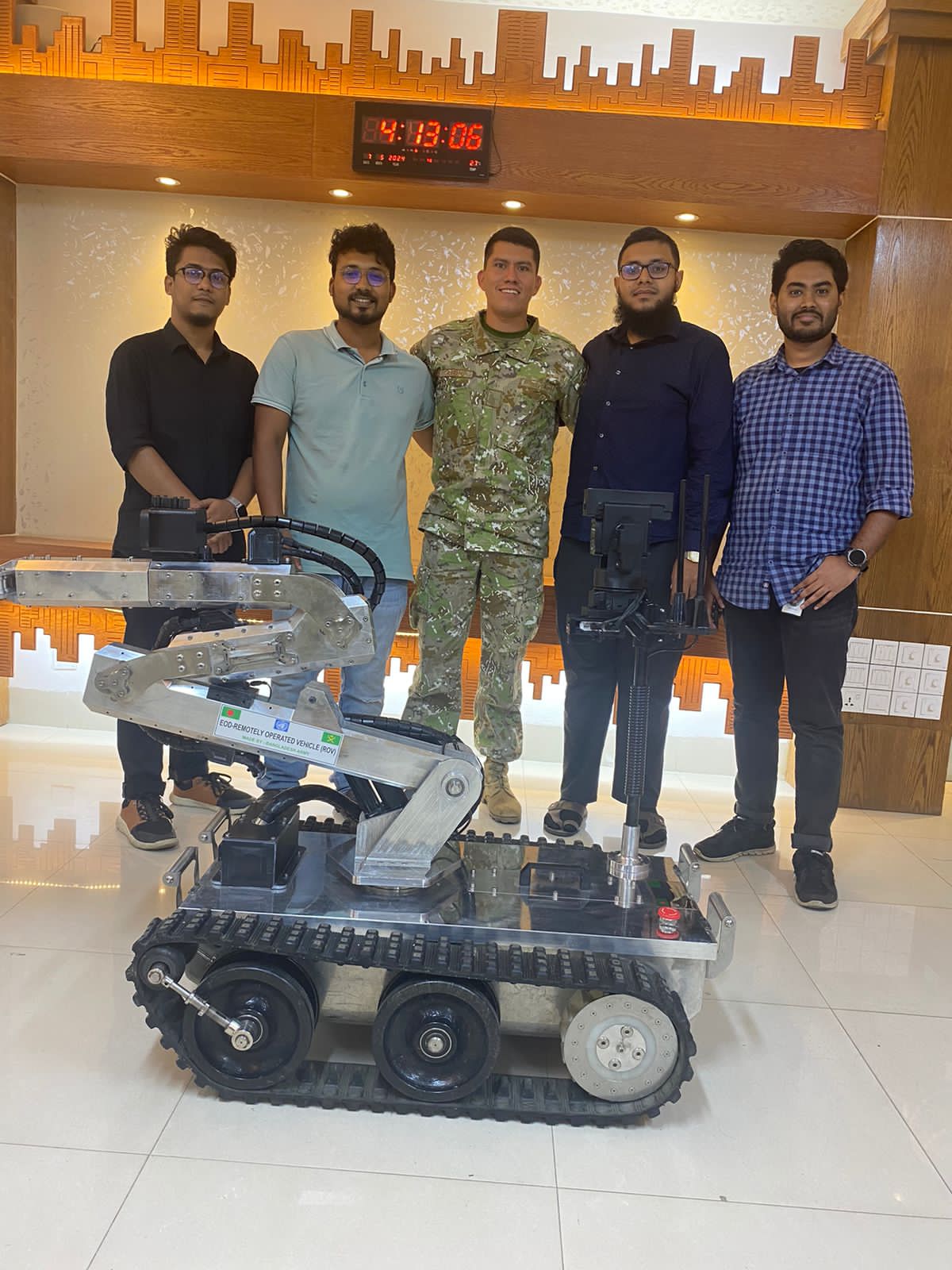
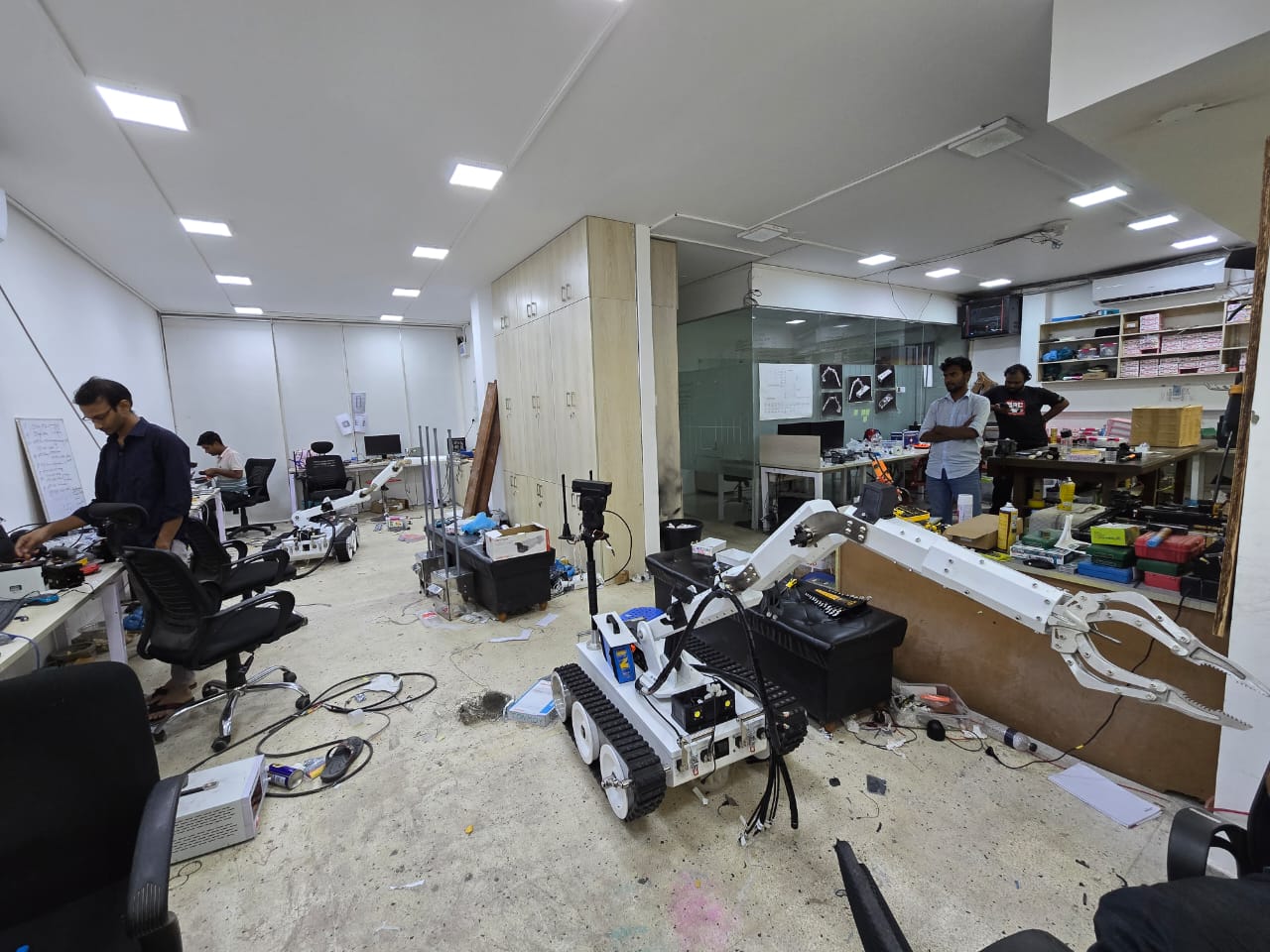
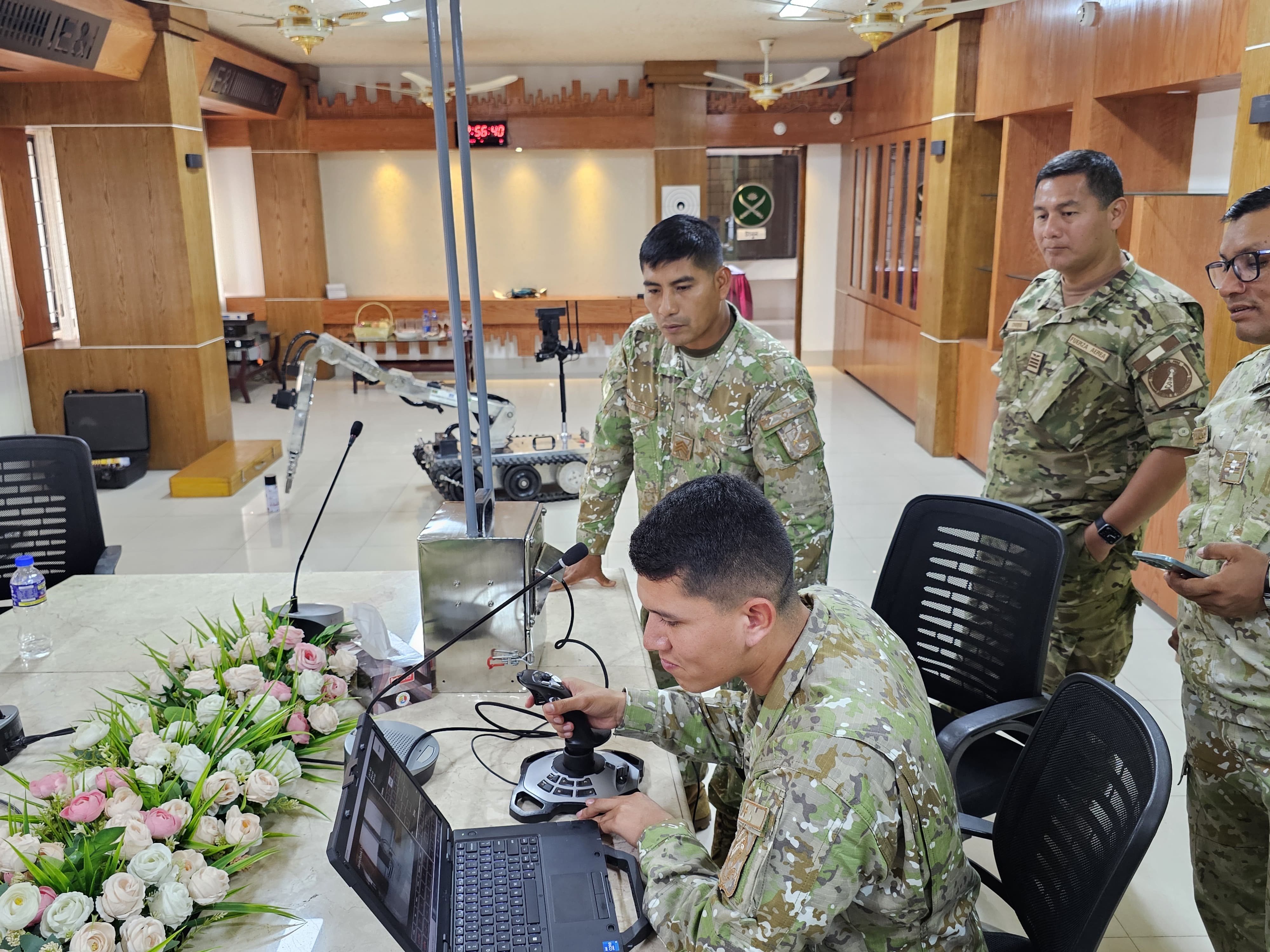
6 field-ready units, validated on the 6-DOF ROV platform, deployed in United Nations operations.
Results
Why it matters (industry)
This is defense-grade robotics engineering under real operational constraints: deterministic timing, field-hardened signalling, a low-latency RF standoff link, and a communication scheme robust enough to run unattended in the field without a single point of protocol failure. The addressed-feedback broadcast scheme is currently running in 6 units doing real EOD work in UN operations — the reliability bar embedded teams in robotics, defense, and industrial automation look for.
Why it matters (academic / technical depth)
This project produced original, peer-reviewed research: a feedback mechanism for master–slave broadcast over RS485 that resolves the response-collision problem inherent to multi-drop buses, validated experimentally on a real 6-DOF robotic platform. It combines real-time systems design, differential-signalling theory, DMA-based transfer, CRC-based error detection, and RF control-link engineering (SBUS, 1.4 GHz RF, SIYI TX/RX) into a single deployable system — bridging embedded engineering practice and communication-protocol research.
Gallery

175 views